You put your name to it
Members sign the Prevention Declaration — five commitments any serious leader can read and agree with. Signing is public. It gives you language to use inside your own organization on Monday morning.
Strategic Security Advisors · The space before crisis
The Prevention Network is a standing community of leaders who have put their name to one position: we will look before the crisis, not only respond after it.
Welcome. I'm Daniel Schneider, and I spent fifteen years finding the same thing after every incident — somebody already knew. That is the whole reason this exists.
Free to join. Always will be.
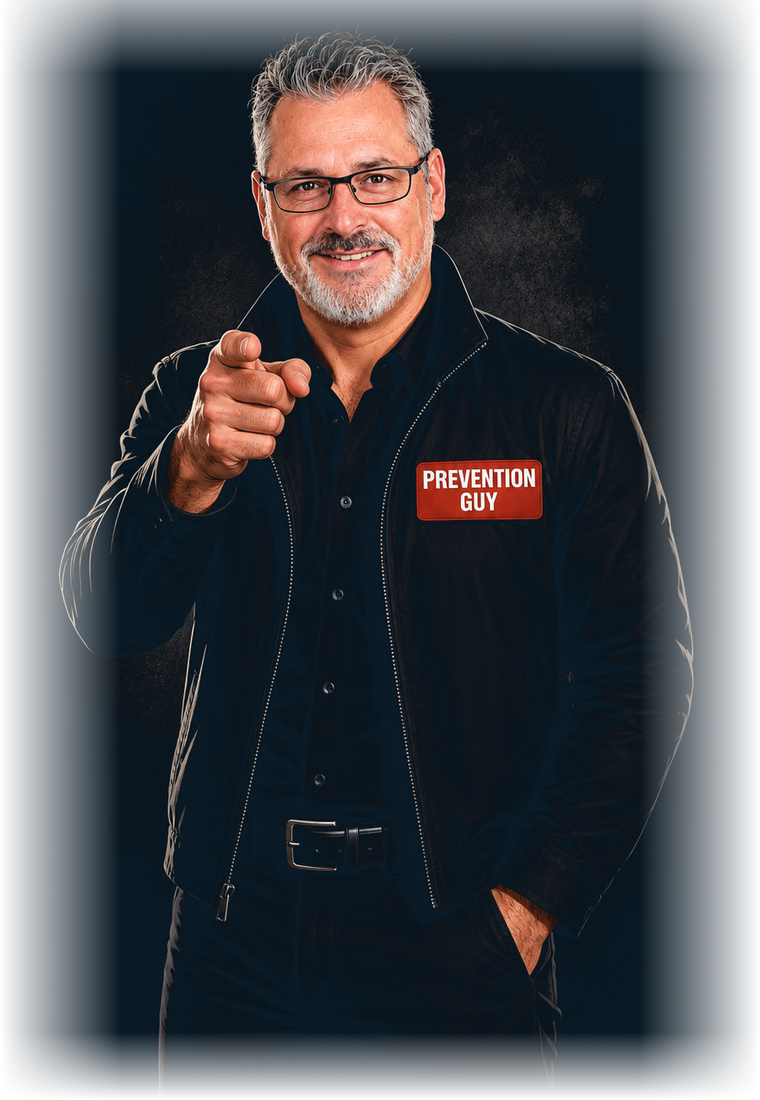
None of it was hidden. It was scattered. Noticed by someone. Said to someone. And still missed — not because no one knew, but because no one owned it. That interval has a name, and it is the only part of a crisis you can still change.
What the Network is
This is not a newsletter with a logo on it. Membership starts with a signature, because a stated position is the first thing most organizations are missing.
Members sign the Prevention Declaration — five commitments any serious leader can read and agree with. Signing is public. It gives you language to use inside your own organization on Monday morning.
Directors, administrators, clergy, operators, and security professionals who carry prevention as an actual responsibility. Bring what you're seeing and hear how someone in a different sector handled the same thing.
Prevention briefings, companion resources from The Space Before Crisis, recorded sessions, and first notice on panels, webinars, and workshops before they go public.
Who it's for
If your name would appear in the report, this is written for you. You do not need a security background, a budget line, or a title with "security" in it.
You do need to be willing to say out loud that prevention belongs to someone in your organization — and to be that person, or to name them.
Membership
Signing costs nothing and always will. Membership opens in the first quarter of 2027. Nothing on this site takes payment today.
For the individual leader taking a position.
For the person actually responsible for making it happen.
Not for sale yet. Nothing on this site takes payment. Sign as a Founding Signatory and you get first access and a locked rate when it opens.
For organizations ready to be measured, not just committed.
Founding Signatory standing closes December 31, 2026. Membership opens in the first quarter of 2027. The readiness review and the engagement that follows are delivered by Strategic Security Advisors — the Network gives you the position and the language, the method is delivered in the room.
The commitment
Almost every crisis was seen before it happened.
Noticed by someone. Said to someone. And still missed. Not because no one knew. Because no one owned it.
I will not be surprised by something I could have seen.
I will look before the crisis, not only respond after it.
I will own prevention, and never assume someone else has it.
I will build a place where people can speak, and listen when they do.
I will connect what we see, instead of letting it sit in pieces.
I will act before I am certain, because calm is not the same as safe.
This is the space before crisis. It is where the outcome is still ours to change.
I choose to stand in it.
This is the Prevention Network. This is where I stand.
Sign and join
Two minutes, no cost, nothing to cancel. Your certificate comes straight to your inbox, and you will hear from me four times a year — not more.
Your name and organization appear on the signatory roll unless you opt out. Your email is never sold, rented, or shared.
Form not loading? Open it in a new tab.
Questions
No. Signing is a commitment you make, not a credential you earn. It says where you stand. Organizational standing is separate — it's earned through a scored readiness review and the work that follows, and it's renewed each year so it continues to mean something.
No, and most members aren't. The Declaration is written for the person who would be held responsible after an incident, whatever their title. If that's you, it's for you.
The Network gives you the position, the language, and the peers. It will sharpen how you think and what you ask for. Building the actual program inside your organization — the review, the scoring, the structure — is consulting work, and it's delivered in an engagement, not in a membership.
Signatory: a few minutes a quarter to read the briefing. Member: one live session a month, an hour, recorded if you can't attend. Nothing here requires you to be present to get value from it.
Your name and organization appear on the signatory roll unless you ask us not to publish them. There's a box for that at signup, and you can change it any time by replying to a briefing.
Yes. Everyone can sign as an individual for free. If you want your team in the paid layer together, or you want the board session, that's the Organization tier — start with a conversation.
Strategic Security Advisors, a prevention-focused consultancy in Arizona, founded by Daniel Schneider, CPP. The Network grew out of his book The Space Before Crisis and the sign-off he'd been writing in every copy.
Who's behind it
Founder, Strategic Security Advisors · "The Prevention Guy"
A career built on the same finding, over and over: the information was already there. Military service, law enforcement volunteering, and fifteen years inside corporate security, asset protection, and investigations before founding SSA to work on the part everyone skips — the interval before the incident, when the outcome is still open.
Board-certified in security management (CPP, ASIS International). FBI Citizens Academy alumnus. InfraGard member. Co-chair, ASIS Phoenix Houses of Worship Committee. Author, speaker, and co-host of The Security Shift Podcast.
The source
The Space Before Crisis
The argument the Network is built on: incidents are rarely a failure of knowledge. They're a failure of ownership. The book makes the case; the Declaration is what you do about it.
Get the book Get the companion resources